Book Review: “Engaging the Old Testament: How to Read Biblical Narrative, Poetry, and Prophecy Well” by Dominick S. Hernández

Book Review: Engaging the OT

Check out my book review of Engaging the Old Testament: How to Read Biblical Narrative, Poetry, and Prophecy Well by Dominick S. Hernández. This review can be found in the January 2025 issue of the Religious Studies Review: https://onlinelibrary.wiley.com/doi/10.1111/rsr.17566

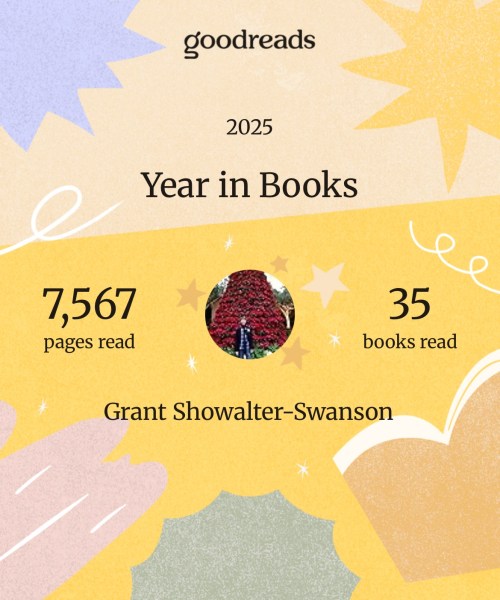
The Top 11/80 Books Grant Read in 2024

Screenshot

1. Tomorrow, and Tomorrow, and Tomorrow by Gabrielle Zevin

2. Never Whistle at Night: An Indigenous Dark Fiction Anthology by Shane Hawk

3. God for Us: The Trinity and Christian Life by Catherine Mowry Lacugna

4. After Method: Queer Grace, Conceptual Design, and the Possibility of Theology by Hanna Reichel

5. The Development of the Doctrine of the Holy Spirit in the Yoruba (African) Indigenous Christian Movement by Caleb Oluremi Oladipo

6. On First Principles by Origen

7. The Spirit Poured Out on All Flesh: Pentecostalism and the Possibility of Global Theology by Amos Yong

8. So We and Our Children May Live: Following Jesus in Confronting the Climate Crisis by Sarah Augustine

9. Harrow the Ninth by Tamsyn Muir

10. Theology in the Capitalocene: Ecology, Identity, Class, and Solidarity by Joerg Rieger

11. The World We Used to Live In: Remembering the Powers of the Medicine Men by Vine Deloria Jr.

Grant’s Top Ten Albums of 2024

1. Gracie Abrams, ‘The Secret of Us’

2. Omar Apollo, ‘God Said No’

3. Kacey Musgraves, ‘Deeper Well’

4. Glass Animals, ‘I Love You So F***ing Much’

5. Beyoncé, ‘Cowboy Carter’

6. Charlie XCX, ‘BRAT’

7. girl in red, ‘I’M DOING IT AGAIN BABY!’

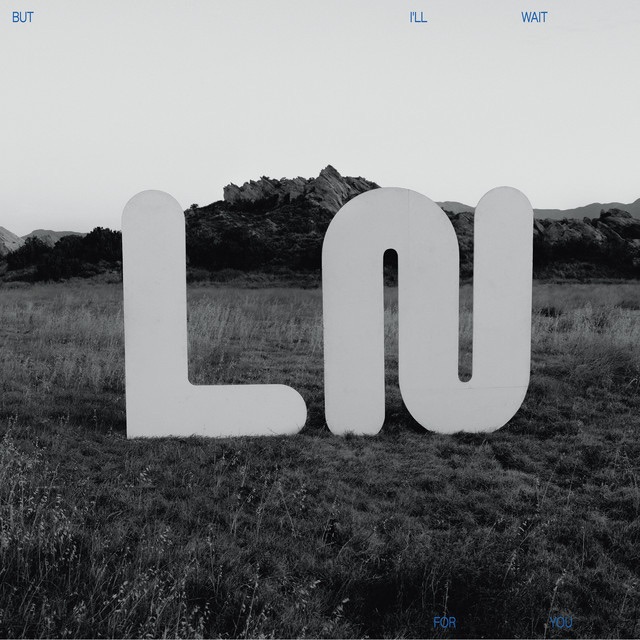
8. Local Natives: ‘But I’ll Wait For You’

9. Taylor Swift, ‘The Tortured Poets Department: The Anthology’

10. Madi Diaz, ‘Weird Faith’

Honorable Mentions

1. Maggie Rogers, ‘Don’t Forget Me’

2. Zara Larsson, ‘VENUS’

3. Conan Gray, ‘Found Heaven’

4. Waxahatchee, ‘Tigers Blood’

5. Bleachers, ‘Bleachers’

6. Orville Peck, ‘Stampede’

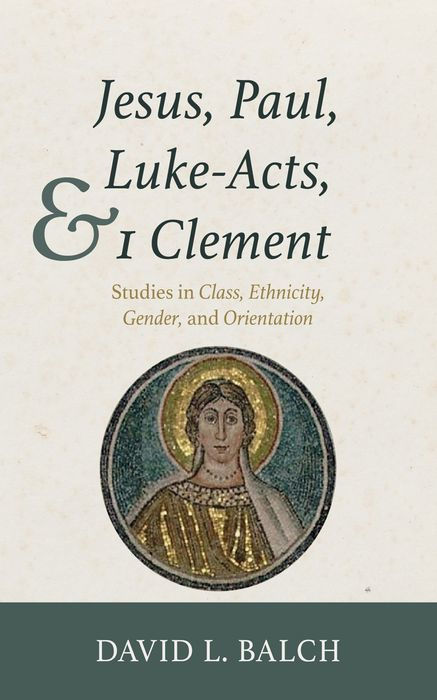
Book Review: “Jesus, Paul, Luke-Acts, & I Clement: Studies in Class, Ethnicity, Gender, and Orientation” By David L. Balch

"Jesus, Paul, Luke-Acts, & I Clement: Studies in Class, Ethnicity, Gender, and Orientation" By David L. Balch

Check out my book review of Jesus, Paul, Luke-Acts, & I Clement: Studies in Class, Ethnicity, Gender, and Orientation by the late David L. Balch. This review can be found in the December 2024 issue of the Religious Studies Review: https://doi.org/10.1111/rsr.17433.

For Native American Heritage Month, the General Commission on Religion and Race (GCORR) asked me to write a study guide for Sarah Augustine’s powerful text, “The Land is Not Empty: Following Jesus in Dismantling the Doctrine of Discovery.” I’m very happy with the collaborative outcome and wanted to share it with folks in case the book study fits with what your church, faith community, or book club is looking for this month and beyond.

Here is the link to the resource: https://www.r2hub.org/library/the-land-is-not-empty-book-study

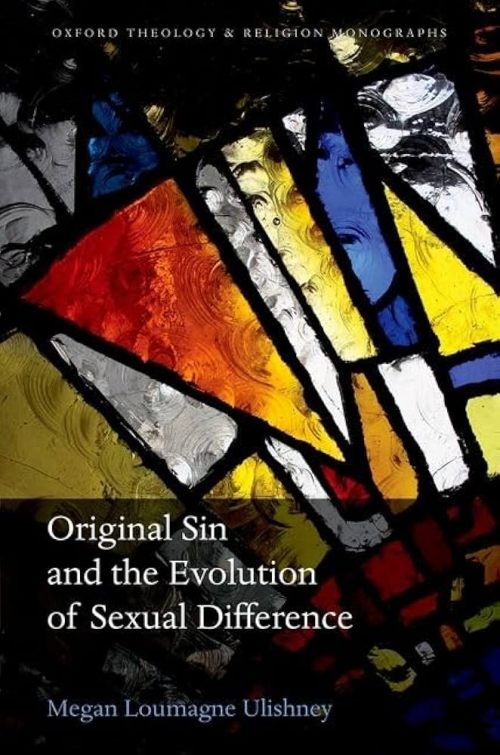
Book Review: “Original Sin and the Evolution of Sexual Difference” By Megan Loumagne Ulishney

"Original Sin and the Evolution of Sexual Difference" By Megan Loumagne Ulishney
"Original Sin and the Evolution of Sexual Difference" By

Whoops! I totally forgot to post about this publication:

Check out my review of Megan Loumagne Ulishney’s book, Original Sin and the Evolution of Sexual Difference, in the February 2024 issue of the Religious Studies Review, Volume 49, Issue 4: http://dx.doi.org/10.1111/rsr.16820

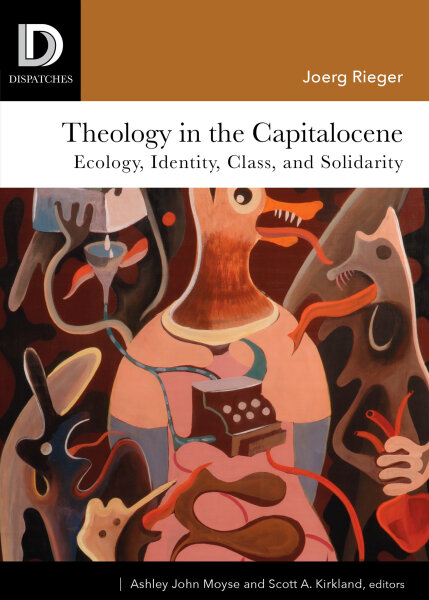
Review of “Theology in the Capitalocene: Ecology, Identity, Class, and Solidarity” by Joerg Rieger

Check out my review of Joerg Rieger’s book, Theology in the Capitalocene: Ecology, Identity, Class, and Solidarity, in the latest issue of Religious Studies Review, Volume 50, Issue 1: https://onlinelibrary.wiley.com/doi/10.1111/rsr.16962

Grant’s Top Ten Albums of 2024

1. Javelin, Sufjan Stevens

2. Living In a Haze, Milky Chance

3. The Valley of Vision, Manchester Orchestra

4. Something to Give Each Other, Troye Sivan

5. The Age of Pleasure, Janelle Monáe

6. The Record, Boygenius

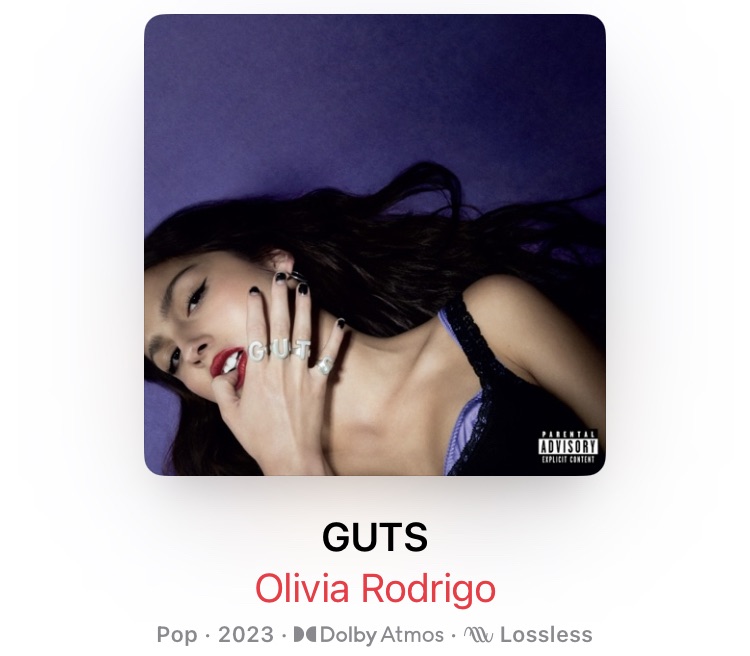
7. Guts, Olivia Rodrigo

8. Time Will Wait For No One, Local Natives

9. Chris Black Changed My Life, Portugal. The Man

10. Gag Order, Kesha

Grant’s 10 Favorite Books of 70 Read in 2023!

1. When the Light of the World Was Subdued, Our Songs Came Through: A Norton Anthology of Native Nations Poetry, edited by Joy Harjo, with LeAnne Howe and Jennifer Elise Foerster

2. Poet, the Warrior, the Prophet, by Rubem Alves

3. Decolonial Christianities: Latinx and Latin American Perspectives, edited by Raimundo Barreto and Roberto Sirvent

4. Reading and Writing the Lakota Language, by Albert White Hat Sr.

5. Healing Haunted Histories: A Settler Discipleship of Decolonization, by Elaine Enns and Ched Myers

6. Galatians: A Theological Commentary on the Bible, by Nancy Elizabeth Bedford

7. Decolonizing Methodologies: Research and Indigenous Peoples, by Linda Tuhiwai Smith

8. Complaint!, by Sara Ahmed

9. Faith and Freedom in Galatia and Senegal: The Apostle Paul, Colonists and Sending Gods, by Aliou Cissé Niang

10. Trading Futures: A Theological Critique of Financialized Capitalism, by Filipe Maia

Book Review: “So We and Our Children May Life: Following Jesus in Confronting the Climate Crisis” by Sarah Augustine and Sheri Hostetler

I recently had the opportunity to read and write the study guide for Sarah Augustine and Sheri Hostetler’s new book, So We and Our Children May Live: Following Jesus in Confronting the Climate Crisis. You can find the study guide on this website under the “S” titles: https://heraldpress.com/study-guides/. Reading this text was both a challenge and an inspiration. As Patty Krawec states in the forward, “In addition to laying out the stark realities of our circumstances, Sarah and Sheri have also laid out strategies for that confrontation. Things that we can and should do, things we can and should demand” (11). Consequently, this book is a prophetic naming of the disastrous realities of the global climate crisis, while also being a practical guide for responding to this present nightmare.

Augustine and Hostetler approach this collaborative work together, bringing their full identities to bear as North Americans: Augustine as a Pueblo (Tewa) descendant and Mennonite; Hostetler as a descendant of Swiss Amish Mennonite farmers. Through this collaborative dialogic, Augustine and Hostetler name the process of confronting the climate crisis as the work of decolonization, solidarity, and survival. They strive to accomplish this work by structuring the book into three parts.

The first part contrasts the lived experiences of “Reality” versus the web of lies spun by the global extractive logic of “reality.” As Christians, Augustine and Hostetler connect “Reality” with God’s kingdom vision for the world: past, present, and future. In the second part of the book, Augustine and Hostetler interrogate popularized approaches to climate change through the “Green Growth” movement and reveal the deadly limitations of these initiatives. Finally, in the third part, Augustine and Hostetler propose an alternate vision of ecological justice and right relationship by providing tangible steps toward co-creating a decolonized future.

Augustine and Hostetler provide a compelling and practical case that both names Reality and offers practical steps toward co-creating a just future for all people and creation. As Augustine and Hostetler reveal, the stakes are great: “We can imagine and choose a life-sustaining, just civilization, or we can continue business as usual. Life and death. What’s good and what’s wrong. That is our choice” (26). My hope and prayer is that this book, and the discussions sparked by it through conversations, reading groups, and study-guide engagement, can lead us toward action in choosing life. Amen.