I Voted! You Should, Too!

I Voted!

I am proud to have voted for the Vice President Kamala Harris and Governor Tim Walz presidential ticket. While I do have policy and ethical issues with some of the tickets’ policies, there is more potential for positive change through advocacy and lobbying within the Harris/Walz ticket than with the Trump/Vance ticket.

I support the Harris/Walz ticket for three reasons. First, I believe that the policy and personal integrity of the Harris/Walz ticket better reflects the Christian faith values that I hold, especially when you take seriously Christ’s gospel ministry proclamation in Luke 4:14-21, as well as the fruit of the Spirit in Galatians 5:22-23. I think that character matters and that the words people say matters. I respect how Harris and Walz present themselves and the ways in which they interact with others.

Second, this is a personal election. As Connor and I imagine having a family, a Trump presidency would put that into question. I take seriously the words of Trump, Clarence Thomas, Project 2025, and others when they suggest the overturning of same-sex marriage and the outlawing of same-sex couple adoption. Even if such restrictive proposals were sequestered within only certain states and we remained safe in Illinois, traveling into states that would not recognize our marriage would be dangerous. For example, if we had a car accident on our drive to visit family in other states, the hospitals in another state could keep Connor, me, and our kids apart. This is not a future that I want for any family, let alone my own, thus I eagerly support Harris/Walz who advocate for all families, including LGBTQIA+ families.

Third, Harris and Walz represent the diversity of America in a way that Trump/Vance do not. Harris and Walz exude integrity and genuineness in their relationships with their families, friends, and constituents. Furthermore, I cannot wait to vote for a fellow Nebraskan! Go big red!

For these reasons, I cast my vote for the Harris/Walz presidential ticket. I am happy to chat with folks who are unsure OR folks who disagree with me. I just ask that you please DM, text, or call me, not write in the comments. This post is a personal testimony, not an invitation for battles in the comment section.

And no matter what, please exercise your civic duty and make your voice heard: VOTE!

I will be praying for all Americans, for all candidates, for peace across the globe, and for all God’s beloved creation.

Thank you and God bless!
Book Review: “Original Sin and the Evolution of Sexual Difference” By Megan Loumagne Ulishney

"Original Sin and the Evolution of Sexual Difference" By Megan Loumagne Ulishney
"Original Sin and the Evolution of Sexual Difference" By

Whoops! I totally forgot to post about this publication:

Check out my review of Megan Loumagne Ulishney’s book, Original Sin and the Evolution of Sexual Difference, in the February 2024 issue of the Religious Studies Review, Volume 49, Issue 4: http://dx.doi.org/10.1111/rsr.16820

Christians & Politics: A Prayer of Lament and a Prayer of Hope

Weave

Christians on political “sides” subscribe to a binary and oppositional understanding of our faith and political engagement that causes separation, harm, and idolatry.

Republicans, especially in the new Trump era, have increasingly synthesized salvific hope and politics toward a Divine King/Strong-Man Nationalism theology. This is problematic since Christ brought salvation in a way antithetical to cultural/political power, control, and exclusion. Instead, he offered preferential and tangible hope for the oppressed/marginalized. He frequently challenged, and even condemned, the power players perpetuating inequality. Ascribing divine privilege to a power-player, like Trump, toward the ends of Christian nationalist control, is idolatry.

On the flipside, Democrats often want to silence faith-led conviction in the polis, falsely believing that a true separation of faith/politics, public/private, secular/sacred is possible. This leads to an idolatry of law, legal systems, and political figures as the sites of salvation and hope.

Christians must be constantly self-reflective and challenge ourselves away from the allure of false-hopes within these camps. Our salvation is in Christ. The gospel message leads us to discern and question all powers that exist if their outcomes are not equivalent to the criteria of Christ’s ministry pronouncement of Luke 4:14-30, or the fruit of the Spirit in Galatians 5:22-23.

Neither party does this. There is no easy-answer to the challenge of discerning and voting with our conscience based on these faith-based criteria. Consequently, no party should have our faith and devotion. No PAC or politically activated denominational or faith-based political platform should have our faith and devotion. No nation or national symbol should have our faith and devotion. No power, system, or institution of humankind should have our faith and devotion. Only the gospel message of Jesus Christ, which commands us to love God and our neighbor as ourselves (Mark 12:30-31), and the subsequent discernment and action of the Holy Spirit in our individual and communal lives, should have our faith and devotion. All else is idolatry. Idolatry that leads to hate and violence in our hearts (and sometimes actions) toward others not like us, or those who hold different values. God clearly warns against this in Matthew 5:43-48.

As the divisive and violent party-driven rhetoric amps up in the next few months, I pray that I, and all of us who follow Christ, remember this counter-cultural message. I pray that we strive to be presences of mediation and love during these volatile times. May the gospel message that we proclaim and live-out be good news for all, not for some. May our words, actions, and lives point to God’s peaceable kingdom on Earth now, as it is in heaven.

We CAN do all things through Christ who strengthens us.

Amen.

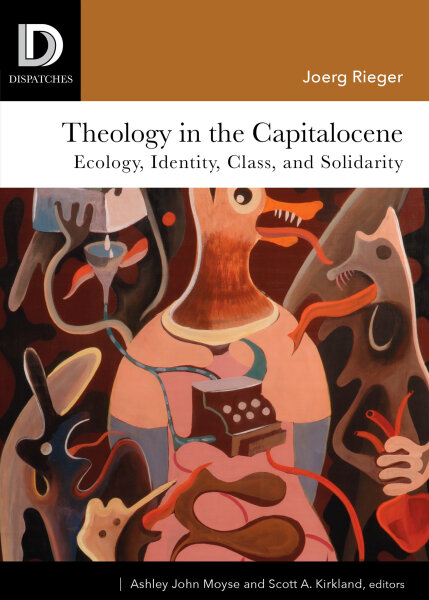
Review of “Theology in the Capitalocene: Ecology, Identity, Class, and Solidarity” by Joerg Rieger

Check out my review of Joerg Rieger’s book, Theology in the Capitalocene: Ecology, Identity, Class, and Solidarity, in the latest issue of Religious Studies Review, Volume 50, Issue 1: https://onlinelibrary.wiley.com/doi/10.1111/rsr.16962

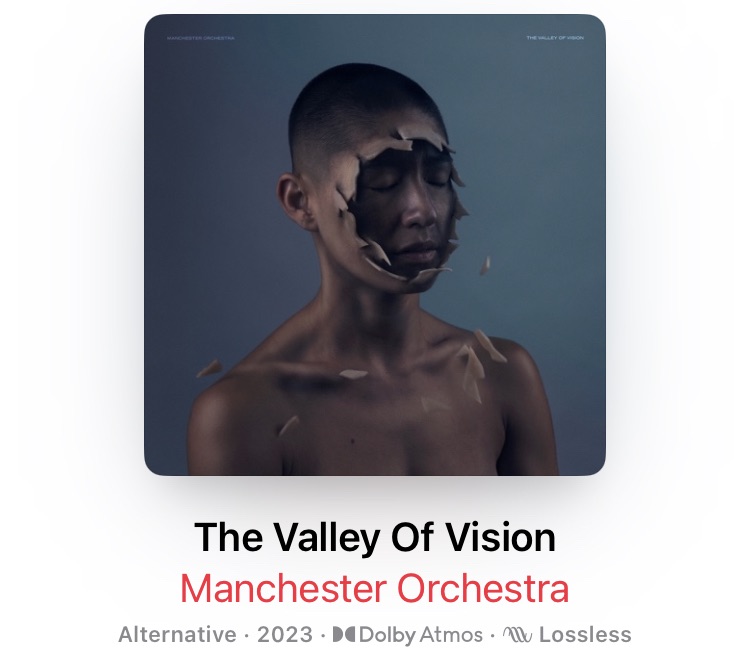
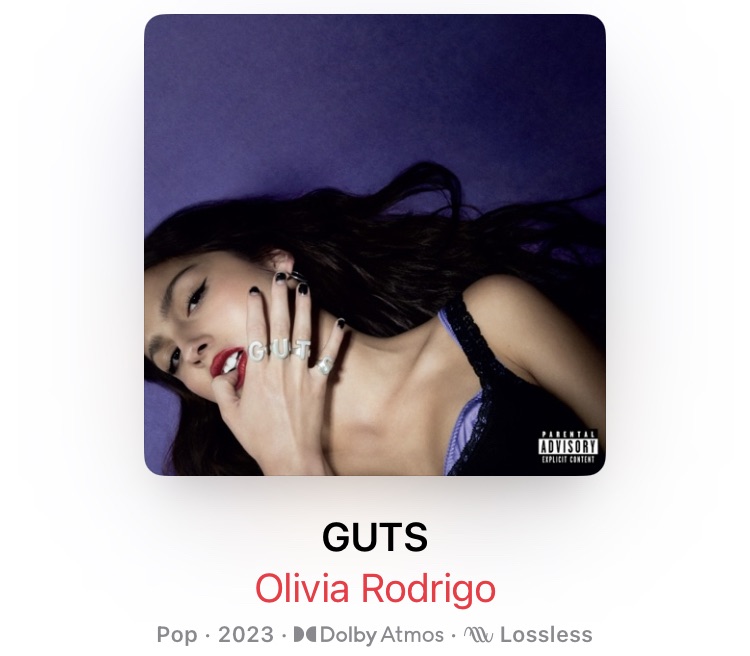
Grant’s Top Ten Albums of 2024

1. Javelin, Sufjan Stevens

2. Living In a Haze, Milky Chance

3. The Valley of Vision, Manchester Orchestra

4. Something to Give Each Other, Troye Sivan

5. The Age of Pleasure, Janelle Monáe

6. The Record, Boygenius

7. Guts, Olivia Rodrigo

8. Time Will Wait For No One, Local Natives

9. Chris Black Changed My Life, Portugal. The Man

10. Gag Order, Kesha

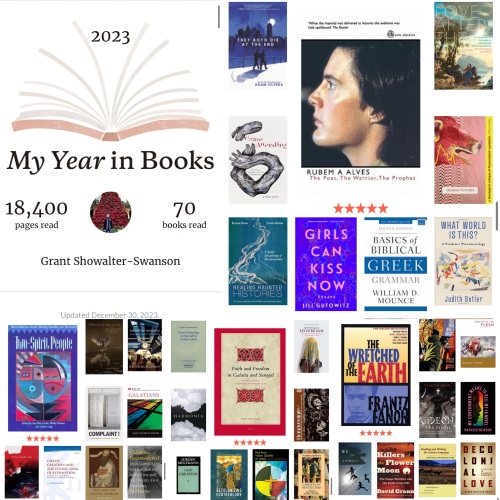
Grant’s 10 Favorite Books of 70 Read in 2023!

1. When the Light of the World Was Subdued, Our Songs Came Through: A Norton Anthology of Native Nations Poetry, edited by Joy Harjo, with LeAnne Howe and Jennifer Elise Foerster

2. Poet, the Warrior, the Prophet, by Rubem Alves

3. Decolonial Christianities: Latinx and Latin American Perspectives, edited by Raimundo Barreto and Roberto Sirvent

4. Reading and Writing the Lakota Language, by Albert White Hat Sr.

5. Healing Haunted Histories: A Settler Discipleship of Decolonization, by Elaine Enns and Ched Myers

6. Galatians: A Theological Commentary on the Bible, by Nancy Elizabeth Bedford

7. Decolonizing Methodologies: Research and Indigenous Peoples, by Linda Tuhiwai Smith

8. Complaint!, by Sara Ahmed

9. Faith and Freedom in Galatia and Senegal: The Apostle Paul, Colonists and Sending Gods, by Aliou Cissé Niang

10. Trading Futures: A Theological Critique of Financialized Capitalism, by Filipe Maia

Book Review: “So We and Our Children May Life: Following Jesus in Confronting the Climate Crisis” by Sarah Augustine and Sheri Hostetler

I recently had the opportunity to read and write the study guide for Sarah Augustine and Sheri Hostetler’s new book, So We and Our Children May Live: Following Jesus in Confronting the Climate Crisis. You can find the study guide on this website under the “S” titles: https://heraldpress.com/study-guides/. Reading this text was both a challenge and an inspiration. As Patty Krawec states in the forward, “In addition to laying out the stark realities of our circumstances, Sarah and Sheri have also laid out strategies for that confrontation. Things that we can and should do, things we can and should demand” (11). Consequently, this book is a prophetic naming of the disastrous realities of the global climate crisis, while also being a practical guide for responding to this present nightmare.

Augustine and Hostetler approach this collaborative work together, bringing their full identities to bear as North Americans: Augustine as a Pueblo (Tewa) descendant and Mennonite; Hostetler as a descendant of Swiss Amish Mennonite farmers. Through this collaborative dialogic, Augustine and Hostetler name the process of confronting the climate crisis as the work of decolonization, solidarity, and survival. They strive to accomplish this work by structuring the book into three parts.

The first part contrasts the lived experiences of “Reality” versus the web of lies spun by the global extractive logic of “reality.” As Christians, Augustine and Hostetler connect “Reality” with God’s kingdom vision for the world: past, present, and future. In the second part of the book, Augustine and Hostetler interrogate popularized approaches to climate change through the “Green Growth” movement and reveal the deadly limitations of these initiatives. Finally, in the third part, Augustine and Hostetler propose an alternate vision of ecological justice and right relationship by providing tangible steps toward co-creating a decolonized future.

Augustine and Hostetler provide a compelling and practical case that both names Reality and offers practical steps toward co-creating a just future for all people and creation. As Augustine and Hostetler reveal, the stakes are great: “We can imagine and choose a life-sustaining, just civilization, or we can continue business as usual. Life and death. What’s good and what’s wrong. That is our choice” (26). My hope and prayer is that this book, and the discussions sparked by it through conversations, reading groups, and study-guide engagement, can lead us toward action in choosing life. Amen.

Book Review: “Beguiled by Beauty: Cultivating a Life of Contemplation and Compassion” by Wendy Farley

Beguiled by Beauty: Cultivating a Life of Contemplation and Compassion by Wendy Farley is a practical exploration of the practice of contemplation and attentiveness to beauty. Farley makes this connection between contemplation and beauty by first emphasizing that “the core practice of a contemplative way of life is radical compassion….A contemplative way of life is motivated by a devotion to the welfare of others” (7). While contemplation is primarily practiced through interior work and discipline, Farley notes that such interior work is oriented toward relationality. This relationality originates, and is rooted, within the Divine. From this rootedness within the Divine Beloved, the interior work of contemplation then radiates outward as radical compassion for all creation.

With this understanding of the communal nature of contemplation and its interior work, Farley then defines beauty. She defines beauty as “the threshold to Divine Goodness and a door into radical compassion. When we fall in love with the beauty of the world, we care all the more passionately about the well-being of the environment and all of the beings in the world” (16). Since attentiveness to beauty connects humanity with the Divine Goodness of God’s creation, leading humans into radical compassion and care for that creation. Consequently, this attentiveness to beauty, according to Farley, is a crucial tool of contemplation. From this synthetic framework of the interior work of contemplation and attentiveness to beauty, rooted in relationality with Divine Goodness, leading to radical compassion amidst of all of creation, Farley structures the contents of Beguiled by Beauty.

Following the first introductory chapter where Farley establishes this framework, chapters 2-3 elaborate this framework in greater detail. Chapters 4-7 provide general examples of the synthetic framework between contemplation and beauty, while also noting benefits and challenges within this framework. In the eighth chapter, Farley concludes with practical examples of contemplative practices that offer opportunities to be attentive to beauty within everyday life.

Beguiled by Beauty successfully achieves Farley’s goal of providing a theoretical and practical approach to contemplative practice that is attentive to beauty so that individuals can draw deeper into God’s Divine Goodness and bear fruits of radical compassion toward all of compassion. However, a greater exploration into the role of privilege within practices of contemplation would have made this text stronger. For example, Farley states that “the causes of well-being and unhappiness lie deep inside us and we share them without knowing it” (10). While this statement rings with truth, so too do systematic and structural injustice and marginalization dramatically and tangibly impact lived experiences within all of creation. Consequently, a nuanced discussion of the role of privilege and oppression, and their consequent impact on access to contemplation, would have made the argument of this text stronger.

‘Lakota Language I’ Final @ Sinte Gleska University

I have had the joy of taking ‘Lakota Language I’ through Sinte Gleska University on the Rosebud Reservation in South Dakota this semester. It has been a blast reconnecting learning Lakota language basics, philosophy of life, the power of storytelling, and the importance of decolonizing our minds. It has also been so great reconnecting with folks at Sinte!

Today I had the opportunity to present my final and it was so much fun. First I learned, sang, and translated the Lakota Bernstein Bears theme song. Check out the theme song here: https://youtu.be/LJF1BfIONhI?si=fMTli5N23G_BOV67. I also wrote a series of haikus in Lakota, their literal translation, and than an English haiku translation. You can see the song lyrics, the three haikus, and my English translations below.

Matȟó Waúŋšila Thiwáhe – Theme Song

Até iná čhúŋkš čhiŋkší – (My Father, My Mother, Daughter, Son)

Matȟó waúŋšila kiŋ – (The Kind Bear[s])

Lila ihákčhiktapi – (They feel very attached to each other)

líla oíyokiphi! – (Very Pleasant!)

Até iná čhúŋkš čhiŋkší – (My Father, My Mother, Daughter, Son)

Matȟó waúŋšila kiŋ – (The Kind Bear[s])

imáǧaǧaič’iyapi – (They enjoy themselves)

líla oíyokiphi! – (Very Pleasant!)

Até iná čhúŋkš čhiŋkší – (My Father, My Mother, Daughter, Son)

Matȟó waúŋšila kiŋ – (The Kind Bear[s])

Lila ihákčhiktapi – (They feel very attached to each other)

líla oíyokiphi! – (Very Pleasant!)

1

Lakota:

Rocky, Owauηspe

Thuŋkášila Etάηhaη

Wόuηspe Iwάču

English Literal:

Rocky, class

Creator from

Learning I receive

Haiku:

From Rocky, the Class

and the Creator – I have

received much knowledge.

2

Lakota:

Wakȟaηpi Héchapi

Wičhoni Na Wičhúηt’e

Wičhakağapi

English Literal:

Sacred they are

Life and death

They create

Haiku:

All that can create

sparks of life and final death

is wholly sacred.

3

Lakota:

Lakȟótiyapi Kiη

Waúηspekhiye

Lakȟόl-Wičhόuη Kiη

English Literal:

The Lakota language

Teaches [teacher]

The Lakota way of life

Haiku:

Lakota language

is more than words – a way of

life – philosophy

Psalm 42 Lectio Divina Response Poem

Pour out humility on the mighty

and convict them of the evil

in superiority and domination,

oh Lord.

My heart is disquieted within

the real-word examples of suffering

caused by pride and greed.

My mind is heavy with the knowledge

of dissension, based on arguments

over the worthiness and belovedness

of those on the margins.

My soul longs for unity

based on the constant striving

to tangibly center

the imago dei

within all Creation.

Unity does not mean assimilation

but just-filled redistribution

of the resources and experiences

necessary to thrive.

May we tirelessly pursue

the unity of all creation

that translates into the

tangible flourishing

and holistic well-being

of all people

and all created things.

Amen.