Richard Rothstein’s ‘The Color of Law: A Forgotten History of How Our Government Segregated America’

www.goodreads.com/book/show/32191706

“If government had declined to build racially separate public housing in cities where segregation hadn’t previously taken root, and instead had scattered integrated developments throughout the community, those cities might have developed in a less racially toxic fashion, with fewer desperate ghettos and more diverse suburbs. If the federal government had not urged suburbs to adopt exclusionary zoning laws, white flight would have been minimized because there would have been fewer racially exclusive suburbs to which frightened homeowners could flee. If the government had told developers that they could have FHA guarantees only if the homes they built were open to all, integrated working-class suburbs would likely have matured with both African Americans and whites sharing the benefits. If state courts had not blessed private discrimination by ordering the eviction of African American homeowners in neighborhoods where association rules and restrictive covenants barred their residence, middle-class African Americans would have been able gradually to integrate previously white communities as they developed the financial means to do so. If churches, universities, and hospitals had faced loss of tax-exempt status for their promotion of restrictive covenants, they most likely would have refrained from such activity. If police had arrested, rather than encouraged, leaders of mob violence when African Americans moved into previously white neighborhoods, racial transitions would have been smoother. If state real estate commissions had denied licenses to brokers who claimed an “ethical” obligation to impose segregation, those brokers might have guided the evolution of interracial neighborhoods. If school boards had not placed schools and drawn attendance boundaries to ensure the separation of black and white pupils, families might not have had to relocate to have access to education for their children. If federal and state highway planners had not used urban interstates to demolish African American neighborhoods and force their residents deeper into urban ghettos, black impoverishment would have lessened, and some displaced families might have accumulated the resources to improve their housing and its location. If government had given African Americans the same labor-market rights that other citizens enjoyed, African American working-class families would not have been trapped in lower-income minority communities, from lack of funds to live elsewhere. If the federal government had not exploited the racial boundaries it had created in metropolitan areas, by spending billions on tax breaks for single-family suburban homeowners, while failing to spend adequate funds on transportation networks that could bring African Americans to job opportunities, the inequality on which segregation feeds would have diminished. If federal programs were not, even to this day, reinforcing racial isolation by disproportionately directing low-income African Americans who receive housing assistance into the segregated neighborhoods that government had previously established, we might see many more inclusive communities. Undoing the effects of de jure segregation will be incomparably difficult. To make a start, we will first have to contemplate what we have collectively done and, on behalf of our government, accept responsibility” (Richard Rothstein, ‘The Color of Law: A Forgotten History of How Our Government Segregated America’).

Poem in Geez Magazine’s 2021 Advent Devotion

I’m thrilled to share that my poem was included in Geez Magazine’s 2021 Advent book: ‘Songs for the Shadows: A Season of Embracing the Dark.’

If you don’t have a plan for advent devotions already, I highly recommend snagging yourself a copy today: https://geezmagazine.org/blogs/entry/songs-for-the-shadows

My poem is called ‘The Spirit Finds Me in the Darkness’ and is a re-imagining of Psalm 23.

UMC Northern Illinois Annual Conference Prayer, 10.2.21, Rev. Grant Swanson

God Among Us,

Whose Spirit enlivens our hearts, words, and actions,

Thank you for this community of faith-filled colleagues

who are seeking your guidance in all that we do.

We are especially thankful

to the presenters, organizers, and technology support team

for making this vital day possible.

As we continue to seek and follow the path you have laid for us-

in ministry and service-

to all people and creation-

toward your Kin-dom transformation of the world-

We know that You, Jesus, make a way.

You paved the way for us, proclaiming your ministry,

and calling us as your followers into that ministry,

in Luke 4:18-19:

-To bring good news to the poor

-To proclaim release of the captives

-And recovery of sight to the blind

-To let the oppressed go free

-To proclaim the year of our Lord’s favor.

As you fulfilled this ministry proclamation

in life, death, and resurrection,

may we seek to fulfill that call

in our words, actions, and decisions,

no matter how big or how small,

as individuals and as the Body of Christ,

both in our discussions and votes today,

and in our lives of minsitry and love

today, tomorrow, and evermore.

You make a way for us on this path of ministry

through your incarnate model,

rooted in your divinely boundless love,

and empowered by your dynamic Spirit.

Amen.

The Co-Creation of the Lord’s Garden (Inspired by Isaiah 61)

The call of justice creation is upon us

because God’s Garden bears fruits

only of goodness and love;

injustice has no place to take root

in the Lord’s Garden.

Our Creator God invites us

to tend to the Lord’s Garden –

beyond performative words –

            toward a tangible justice harvest

for all people,

and all creation,

that cultivates the margins.

Our Gardner God call us

to provide clinical counseling

                        for those processing trauma;

to become abolitionists

of the prison industrial complex

and free prisoners from servitude to capitalism;

to expunge student debt;

to create housing for all;

to make medical and mental healthcare

                        accessible to all;

to demand an end to war

                        and instead fund the wholistic care

                                    of all children;

to end global hunger

                        and distribute hoarded resources

                                    equitably;

to lay fallow the Earth

                        from extractive industries

                                    and repent of our idolatrous beliefs

                        of private property ownership

over God’s creation.

We tend to these seedlings of justice –

toward the future harvest of God’s Garden –

            because they are right and just;

            because they are love;

            because God has covenanted with us

                        as followers of Christ

                                    to co-create the Lord’s Garden.

This is our salvation:

            to tend to the Earth

            and all of its inhabitants

            until God’s intended flourishing

springs forth for all creation –

from mutual co-creation –

            amidst adulation of praise,

            communal well-being,

            and the final fruition

of God’s glorious Garden.

‘Homeland Elegies’ Book Response

www.goodreads.com/book/show/50358133

I especially appreciated Akhtar’s clear explanation of how ‘Economy’ is our National god in the United States. All people, no matter their religion, bow down in deference to Economy before their gods.

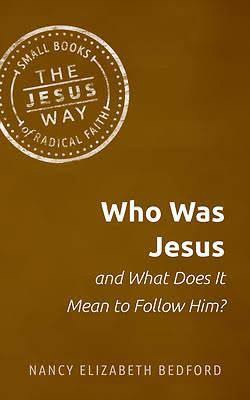
Review of ‘Who was Jesus and What does it Matter’ by Dr. Nancy Bedford

www.goodreads.com/review/show/4236110185

This short book from Dr. Nancy Bedford packs a vital theological punch. It poses the question ‘Who was Jesus’ and ‘What does it mean to follow him’ in an attempt to redirect the Church back toward the centrality of Christ, the gospel message, and what it means to be the Body of Christ. Without the centralization of Christ and what it means to tangibly follow Christ, the Church has lost its way. This text is a clarion call for our times with tangible steps for redirecting ourselves and our communities toward Christ.

Dr. Bedford provides 6 entry points into the two posed questions:

1. Who is Jesus of Nazareth and what does it mean to follow him?

2. Who is Jesus ‘the Incarnate One’ and what does it mean to follow him?

3. Who is Jesus as Prophet, Teacher, and Healer? And how to follow him?

4. Who is Jesus ‘the executed one?’ How do we follow him?

5. Who is Jesus resurrected and exalted? How do we follow him?

6. Who is Jesus in the Spirit, and how do we follow them?

This book is written to be accessible to all people and has discussion questions for each chapter. As a result, it is perfect for small groups! I highly recommend.

I’ll end this review with a succinct quote that I believe speaks to the concise clarity, beauty, and conviction of this text:

“If we say we follow Jesus, whenever it seems that the fruit of our discipleship does not lead to justice and peacemaking, it is time to reexamine our lives and those of our communities of faith. We can do so with the help of the Spirit by examining more closely the way Jesus lived (Matthew 7:15-20) and asking ourselves whether we are truly walking in his footsteps” (Dr. Nancy Bedford, ‘Who was Jesus and What Does it Mean to Follow Him,’ 74).

Amen!

Review of ‘The NIV Beautiful Word Bible: Updated Version’

www.goodreads.com/book/show/45734929

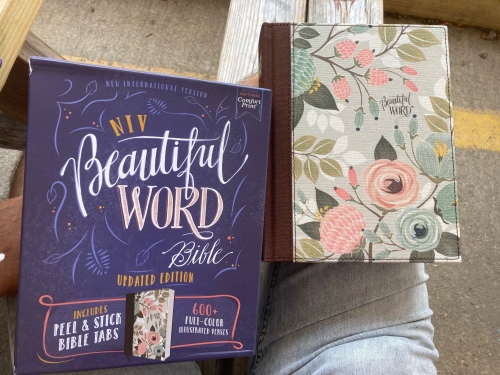
First and foremost, I need to clear the air: this is NOT a gendered book. The only place where the editors hint at a particular presentation is when the editor’s note only mentions biblical figures Hannah and Esther. And to that, I say “come on editors, do better. Resist the idolatry of capitalism and gendered marketing, please. It harms all of us who cannot fit your false expectations of hyper masculinity and feminism.” We need to resist the consumer world that says a Bible designed to highlight the beauty of scripture does NOT mean that it should be primarily marketed to girls. Boys MUST learn to see the beauty of scripture, too. If you get this version for a girl, get it for a boy, too. The Bible is for all people, so let’s stop boxing ourselves in with gendered stereotypes. Thank you and I will now step off my soap box.

This Zondervan NIV 2011 updated translation, written in Zondervan NIV typeface, is a WONDERFUL version of the Bible that is highly engaging. First of all, it does what many versions cannot: it meets the needs of visual learners. The editors of this version worked with BibleGateway to find the most searched scriptures and balanced them with scriptures that are lesser known to present 600 scriptures in colorful artistic presentations through the entirety of the Bible! 9 different artists took charge of illuminating the 600 different scriptures. They also did a fantastic job of making the chosen scriptures memorizable so that folks can engage with their Scripture reading for memorization as well.

Each page of the Bible has a couple of inches on the edge with lines for note-taking. Every few pages has this space taken up with the artistic presentation of scripture. These illustrations are gorgeous and reflect the essence of each individual scripture.

The Bible also comes with sticker tabs for each book of the Bible, if you want to have the books of the Bible marked in this way. All this to say, this version of the Bible is meant to be engaged: written on, highlighted, and covered in stickers. Have at it! Mark it up and make it your own!

The Bible also comes with a sturdy box carrying case which is helpful for being mobile. It is also small enough to carry around with you! The cover itself is a gorgeous felt floral pattern with a woody brown felt binding. Visually appealing without being obnoxious.

The back of the Bible has a table for understanding biblical weights and measures in comparison with our modern weights and measures, an index of the 9 scripture artists and which scriptures illustrations they created, and 5 pages of lines for note-taking.

It has been a joy engaging with this visually stimulating and artistic version of the NIV translation Bible and I look forward to utilizing it and learning from it in the months/years to come!

‘Truth-Telling in Community’ Testimony

Returning to in-person Church, work, and life-in-general fills my heart with joy. To be physically present together after so long apart brings warmth, relief, and gratitude.

And yet, returning to in-person church, work…life in general…it is so gosh darn hard. For many of us, there is so much uncertainty, ambiguity, and frustration. I don’t know about you, but I find myself full of questions and unknowns. Do I feel safe going back to in-person work? Will virtual options remain accessible to me? How do I navigate the varieties of physical contact comfort levels with friends, families, and loved ones? Will we ever reach a time where health and science won’t be politicized? Am I, and those I love, going to be okay?


For me, these past few weeks have been full of these questions and ambiguities, causing me stress and anxiety. And when I learned that the theme at my church this week, Urban Village Church, Chicago, was going to be about ‘truth telling’ and ‘living in community’ from Colossians 3:9-15, I knew that I was being provided an opportunity to reflect on these questions in prayer and in a reflective way that I hadn’t before. I’m excited to share some of the things that God has revealed to me in this time of prayer.


First, disclaimer, what I’m about to say completely takes Colossians 3:9 out of context. But the words at the start of verse nine, “Do not lie to one another” (3:9), stuck out to me during my prayer time this week. It connected with my experiences and convicted me to admit when I’m exhausted and worn out, to both myself and others, in this time of return to in-person life. If I don’t truth-tell with myself, and also with others, I am going to burn out.


Along with truth-telling, I need to communicate my boundaries and needs. For example, what are the safety policies of the place I’m going? Are there policies? Am I comfortable with that? What alterations can I take to feel safe? Hugs, handshakes, and high fives…consent conversations are as vital now as ever before. Care and tend to myself and my needs so that I can care and tend to the needs of others. Communication communication communication. Communication is the secret sauce to truth-telling in community.


And in this communication, I need to recognize that we are all figuring this out together in real-time. We are going to make mistakes. So grace for ourselves and others is key. And what does that look like? Colossians 3:12-13 helped me to think about grace as clothing ourselves with “compassion…kindness, humility, meekness, patience…and forgiv[ing] one another.”


But, when in doubt, I ask myself: “am I loving myself and others as I navigate this situation?” God is love, as verse 14 reminds us. So, as we navigate truth telling in community, if we operate out of love, God will be present with us.
If you take anything away from my reflection today, I hope it’s the greatest lesson I’ve learned in my prayer preparation this week: ‘When in doubt, love yourself and love others.’


Amen.

Book Review of ‘The Plague’by Albert Camus

https://www.goodreads.com/review/show/761931279

What sounds like a good book to read during the resurgence of a global pandemic? How about a book detailing the ravages of the plague in the 1940’s?

But in all seriousness, this was an incredible book with insights and wisdoms terribly relevant today:


“When a war breaks out, people say: ‘It’s too stupid; it can’t last long.’ But though a war may well be ‘too stupid,’ that doesn’t prevent its lasting. Stupidity has a knack of getting its way; as we should see if we were not always so much wrapped up in ourselves. In this respect our townsfolk were like everybody else, wrapped up in themselves; in other words they were humanists: they disbelieved in pestilences. A pestilence isn’t a thing made to man’s measure; therefore we tell ourselves that pestilence is a mere bogy of the mind, a bad dream that will pass away. But it doesn’t always pass away and, from one bad dream to another, it is men who pass away, and the humanists first of all, because they haven’t taken their precautions. Our townsfolk were not more to blame than others; they forgot to be modest, that was all, and thought that everything still was possible for them; which presupposed that pestilences were impossible. They went on doing business, arranged for journeys, and formed views. How should they have given a thought to anything like plague, which rules out any future, cancels journeys, silences the exchange of views. They fancied them selves free, and no one will ever be free so long as there are pestilences” (Albert Camus 37).

Book Review of ‘The Interior Castle’ by St. Teresa of Avila

www.goodreads.com/book/show/162512

This book has been a balm, guide, challenge, and spiritual enrichment over the past month. I highly recommend it as a guide in time of devotion, prayer, and spiritual reflection!

Here are some of my favorite quotes:

“When we turn away from our small selves and toward God, both our understanding and our will become more sublime and more inclined to embrace all that is good. We would do ourselves great disservice if we never endeavored to rise above the mud of our personalized misery….If we are perpetually stuck in our own acre of tribulation, our stream will never flow free from the more of fear and faintheartedness” (47).

“Guard yourselves, my friends, against matters beyond your control” (50).

“Failing to deal with a problem out of fear of yielding to a negative temptation may be in itself yielding to a negative temptation” (52).

“Remember: all you have to do as you begin to cultivate the practice of prayer is to prepare yourself with sincere effort and intent to bring your will into harmony with the will of God” (61).

“Perfection isn’t about consolation, it’s about loving. We are rewarded by doing whatever we do with righteousness and love” (81).

“Remember: if you want to make progress in the path path and ascend to the places you have longed for, the important thing is not to think much but to love much, and so to do whatever best awakens your love” (91).

“I think that His majesty wishes we would do whatever it takes to understand ourselves. We need to quit blaming the soul for problems caused by a weak imagination, human nature, and the spirit of evil” (95).

“On the spiritual path, the Beloved asks only two things of us: that we love him and that we love each other…. if we do these perfectly, we are doing his well and so we will be united with him” (140).

“No matter how spiritual a soul may be, it’s not wise to reject corporeal forms. Meditating on the holiness of humanness is not unholy” (221).

“The more we understand about God‘s communion with creatures, the more we will praise his greatness. We should cultivate reverence for souls in whom our Beloved seems to take such delight. Each of us has a soul, but we forget to value it. We don’t remember that we are creatures made in the image of God. We don’t understand the great secrets hidden inside of us” (259-260).

“Remember: good works are a sign of God‘s blessing” (288).

“Even if our deeds are small, they will be made great through the greatness of our love for God” (295).