Book Review of ‘The Plague’by Albert Camus

https://www.goodreads.com/review/show/761931279

What sounds like a good book to read during the resurgence of a global pandemic? How about a book detailing the ravages of the plague in the 1940’s?

But in all seriousness, this was an incredible book with insights and wisdoms terribly relevant today:


“When a war breaks out, people say: ‘It’s too stupid; it can’t last long.’ But though a war may well be ‘too stupid,’ that doesn’t prevent its lasting. Stupidity has a knack of getting its way; as we should see if we were not always so much wrapped up in ourselves. In this respect our townsfolk were like everybody else, wrapped up in themselves; in other words they were humanists: they disbelieved in pestilences. A pestilence isn’t a thing made to man’s measure; therefore we tell ourselves that pestilence is a mere bogy of the mind, a bad dream that will pass away. But it doesn’t always pass away and, from one bad dream to another, it is men who pass away, and the humanists first of all, because they haven’t taken their precautions. Our townsfolk were not more to blame than others; they forgot to be modest, that was all, and thought that everything still was possible for them; which presupposed that pestilences were impossible. They went on doing business, arranged for journeys, and formed views. How should they have given a thought to anything like plague, which rules out any future, cancels journeys, silences the exchange of views. They fancied them selves free, and no one will ever be free so long as there are pestilences” (Albert Camus 37).

Book Review of ‘The Interior Castle’ by St. Teresa of Avila

www.goodreads.com/book/show/162512

This book has been a balm, guide, challenge, and spiritual enrichment over the past month. I highly recommend it as a guide in time of devotion, prayer, and spiritual reflection!

Here are some of my favorite quotes:

“When we turn away from our small selves and toward God, both our understanding and our will become more sublime and more inclined to embrace all that is good. We would do ourselves great disservice if we never endeavored to rise above the mud of our personalized misery….If we are perpetually stuck in our own acre of tribulation, our stream will never flow free from the more of fear and faintheartedness” (47).

“Guard yourselves, my friends, against matters beyond your control” (50).

“Failing to deal with a problem out of fear of yielding to a negative temptation may be in itself yielding to a negative temptation” (52).

“Remember: all you have to do as you begin to cultivate the practice of prayer is to prepare yourself with sincere effort and intent to bring your will into harmony with the will of God” (61).

“Perfection isn’t about consolation, it’s about loving. We are rewarded by doing whatever we do with righteousness and love” (81).

“Remember: if you want to make progress in the path path and ascend to the places you have longed for, the important thing is not to think much but to love much, and so to do whatever best awakens your love” (91).

“I think that His majesty wishes we would do whatever it takes to understand ourselves. We need to quit blaming the soul for problems caused by a weak imagination, human nature, and the spirit of evil” (95).

“On the spiritual path, the Beloved asks only two things of us: that we love him and that we love each other…. if we do these perfectly, we are doing his well and so we will be united with him” (140).

“No matter how spiritual a soul may be, it’s not wise to reject corporeal forms. Meditating on the holiness of humanness is not unholy” (221).

“The more we understand about God‘s communion with creatures, the more we will praise his greatness. We should cultivate reverence for souls in whom our Beloved seems to take such delight. Each of us has a soul, but we forget to value it. We don’t remember that we are creatures made in the image of God. We don’t understand the great secrets hidden inside of us” (259-260).

“Remember: good works are a sign of God‘s blessing” (288).

“Even if our deeds are small, they will be made great through the greatness of our love for God” (295).

The Bible is not a guidebook to manhood or womanhood. It is a guidebook to personhood in Christ: Love God and Love your Neighbor (all people & Creation) as yourself. Anyone trying to package the Bible as a guidebook for gender presentation is on a slippery slope to idolatry.

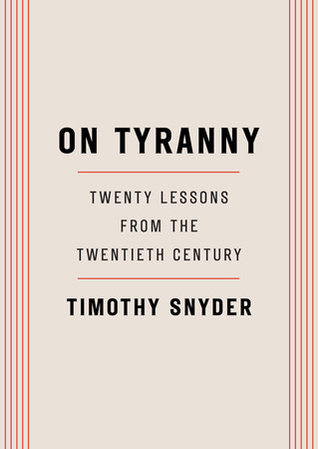
Book Review of ‘On Tyranny: Twenty Lessons from the Twentieth Century’ by Timothy Snyder

On Tyranny: Twenty Lessons from the Twentieth Century by Timothy Snyder

My rating: 5 of 5 stars


Even though Trump lost the 2020 election, we have much work to do in restoring/expanding electoral democracy into a truly accessible and representative system. This book provides practical and essential signposts and steps to resist tyranny/authoritarianism and evermore live-into our representative democracy.

‘On Tyranny: Twenty Lessons from the Twentieth Century’ by Timothy Snyder is a MUST read that is concise, direct, and pocket sized!

“Any election can be the last, or at least the last in the lifetime of the person casting the vote” (Snyder 29).

“We believe that we have checks and balances, but have rarely faced a situation like the present: when the less popular of the two parties controls every lever of power at the federal level, as well as the majority of state houses. The party that exercises such control proposes few policies that are popular with the society at large, and several that are generally unpopular – and thus must either fear democracy or weaken it” (Snyder 30).

“You submit to tyranny when you renounce the difference between what you want to hear and what is actually the case….As observers of totalitarianism…noticed, truth dies in four modes. The first mode is the open hostility to verifiable reality, which takes the form of presenting inventions and lies as if they were facts. The president does this at a high rate and at a fast pace. One attempt during the 2016 campaign to track his utterances found that 78% of his factual claims were false. This proportion is so high that it makes the correct assertions seem like unintended oversights on the path toward total fiction. Demeaning the world as it is begins the creation of a fictional counter world” (Snyder 66).

“Since in the age of the Internet we are all publishers, each of us bears some private responsibility for the public’s sense of truth. If we are serious about seeking the facts, we can each make a small revolution in the way the Internet works. If you are verifying information for yourself, you will not send on fake news to others. If you choose to follow reporters whom you have reason to trust, you can also transmit what they have learned to others. If you retweet only the work of humans who have followed journalistic protocols, you are less likely to debase your brain interacting with bots and trolls. We do not see the minds that we hurt when we publish falsehoods, but that does not mean we do not harm. Think of driving a car. We may not see the other driver, but we know not to run into their car. We know that the damage will be mutual. We protect the other person without seeing him, dozens of times every day. Likewise, although we may not see the other person in front of his or her computer, we have our share of responsibility for what is on the screen. If we can avoid doing violence to the minds of unseen others on the Internet, others will learn to do the same. And then perhaps our Internet traffic will cease to look like one great, bloody accident” (Snyder 79-80).

“When the American president speaks of fighting terrorism alongside Russia, what he is proposing to the American people is terror management: the exploitation of real, dubious, and simulated terror attacks to bring down democracy. The Russian recap of the first telephone call between the president and Vladimir Putin is telling: the two men “shared the opinion that it is necessary to join forces against the common enemy number one: international terrorism and extremism” (Snyder 109-110).

“A nationalist will say that “it can’t happen here,” which is the first step toward disaster. A patriot says that it could happen here, but that we will stop it” (Snyder 114).

“If young people do not begin to make history, politicians of eternity and inevitability will destroy it. And to make history, young Americans will have to know some. This is not the end, but a beginning” (Snyder 126).


View all my reviews

Goodreads review for ‘Minor Feelings: An Asian American Reckoning’ by Cathy Park Hong

www.goodreads.com/book/show/52845775

This book is a MUST read for those of us who are white.

“As the poet Prageeta Sharma said, Americans have an expiration date on race the way they do for grief. At some point, they expect you to get over it.”

“Patiently educating a clueless white person about race is draining. It takes all your powers of persuasion. Because it’s more than a chat about race. It’s ontological. It’s like explaining to a person why you exist, or why you feel pain, or why your reality is distinct from their reality. Except it’s even trickier than that. Because the person has all of Western history, politics, literature, and mass culture on their side, proving that you don’t exist.”

“Of course, “white tears” does not refer to all pain but to the particular emotional fragility a white person experiences when they find racial stress so intolerable they become hypersensitive and defensive, focusing the stress back to their own bruised ego.”

“Suddenly Americans feel self-conscious of their white identity and this self-consciousness misleads them into thinking their identity is under threat. In feeling wrong, they feel wronged. In being asked to be made aware of racial oppression, they feel oppressed. While we laugh at white tears, white tears can turn dangerous. White tears, as Damon Young explains in The Root, are why defeated Southerners refused to accept the freedom of black slaves and formed the Ku Klux Klan. And white tears are why 63 percent of white men and 53 percent of white women elected a malignant man-child as their leader.”

White supremacy has become so defensive that it blatantly and violently denounces and denies experiences, feelings, and realities of communities of color. This book brilliantly depicts this to us white folks in an uncompromising way. It is up to us to pursue the daily and life-long process of change.

‘Prophet:’

to claim one’s self in

Christ: to imagine God’s King-

-dom into being.

Be Still…God is Our Refuge

God, you call me to

act for justice and mercy.

But teach me stillness.

______________________________________________________________________________________________________________________________

I like to do. I see following God as action. Faith as a verb. That is true. But what does it also mean to also ‘be still’ in God’s presence? To find stillness in God as my refuge (Psalm 46)?

______________________________________________________________________________________________________________________________

God,

I am called to act,

to do:

to advocate

to collaborate

to demand justice

to show mercy

to love profusely.

But what does it mean to be still?

To know that you are my refuge?

To find refuge

and strength

in the stillness

of God’s presence and power:

God’s love.

Lord, hear my prayer.

Amen.

Sabbath Rest

God created and

it was good. Freedom from

perfection’s tyranny.

George Floyd

George Floyd.

Say his name.

Honor his memory.

Murdered

by Officer Derek Chauvin.

Murdered

by a white supremacist

militarized police state.

Murdered

for being black

and living.

But now

some semblance of justice

through accountability.

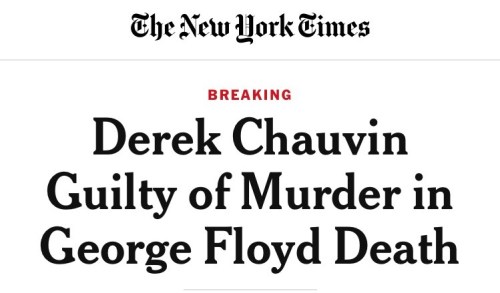
Chauvin found guilty

on all 3 charges.

2nd Degree Murder:

40 years –

but George Floyd is still dead.

3rd Degree Murder:

25 years –

but black people continue to die.

2nd Degree manslaughter:

10 years –

but a murder each day of the trial.

While we await sentencing,

we sigh a collective exhalation of relief

at this brief respite of accountability.

But we cannot replace George Floyd,

God’s beloved child,

and God’s beloved children,

who have been lost –

past and present.

But the future

is present

and we are all called

to the Christ-modeled work

of dismantling white supremacy

and demanding

imagining

transforming

an alternative to

the death dealing

militarized police state.

Say his name.

Honor his name

And let’s get to work.

Rest in power,

George Floyd.

Amen.

A Pigeon and God’s Presence

I scratch and crawl

through fatal attempts

at prayer perfection;

seeking the right words

and phrases to crack

the code of Divine Engagement.

But then, a glance

out the window –

the vibrant blue sky and

the awkwardly fluttering pigeon –

I found God

looking at me

deeply and desirously

with an audible hearty chuckle.

The pigeon landed on a telephone wire

and shit without shame

sure of its belonging and being.

And I laughed,

deeply and uproarously,

prayer punctuating the giggles

as I felt God’s gentle caress

to not take myself

too seriously.

But to rest in the seriousness of

God’s love and desire

for me; in my

most basic needs and desires,

without shame,

as with the bumbling and shitting pigeon,

God is present with me.