Preparation Prayer

Lord,

prepare my ears to hear the suffering

shield my heart to not take on that pain

warm my soul toward genuine empathy

enliven my mind to interpret and translate

and sharpen my tongue to speak the wisdom

of Your Holy Spirit

Amen.

‘Becoming Rooted: One Hundred Days of Reconnecting with Sacred Earth,’ Rev. Dr. Randy Woodley

One of my goals for 2021 is to be more intentional in immersing my heart, mind, and soul in transformative teachings from folks outside my own experiences/perspectives.

I’m thrilled to be starting this 100 day journey of spiritual reflection with our Creator God through ‘Becoming Rooted: One Hundred Days of Reconnecting with Sacred Earth,’ the new book from brilliant theologian, farmer, activist, and scholar Rev. Dr. Randy Woodley.

I invite you to consider joining me in this 100 day journey and order Rev. Dr. Woodley’s new book today: https://www.broadleafbooks.com/store/product/9781506471174/Becoming-Rooted

My Top 16 Books of 2021

As an avid lover of reading, I have enjoyed finding time to read throughout the year of 2021. This year has been a particularly robust year of reading, completing my 65/65 book reading challenge AND reading more nonfiction than fiction books (this is a rarity for me)!

I intended to chose only 10 books for my top books of the year list, but I just couldn’t narrow it down past 16. As a result, you will find a comprehensive list of my top 16 favorite books of the year.

Some of these books made me laugh, while others made me cry. Some were highly informational, and some educated me toward righteous rage and justice-action. Many of these books fed my soul and spiritual practices. Others were highly creative in imagined worlds, while some envisioned something different in our own world. Some of these books are classics, and some are brand new. A few books are written by friends and colleagues while others are written by people I’ll never know. This list crosses the scope of fiction, nonfiction, and poetry.

I hope that this list inspires you to add a few books to your 2022 reading list AND encourages you to reach out and connect with me about them! Please know that I’m always happy to chat about any of the listed books. I’m passionate about each and every one of them!

Please enjoy my ‘Top 16 Books of 2021’ list: https://www.goodreads.com/user/year_in_books/2021/25536404

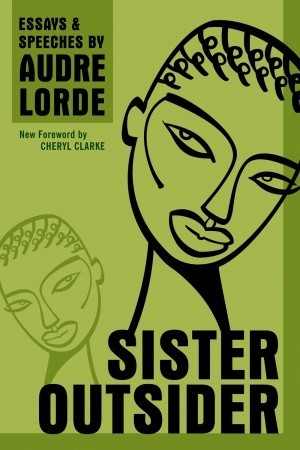
1. ‘Sister Outsider’ by Audre Lorde: https://www.goodreads.com/book/show/730745
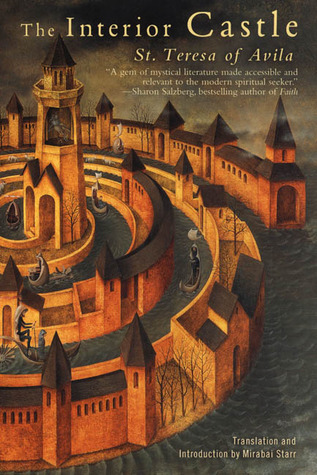
2. ‘The Interior Castle’ by Teresa of Ávila: https://www.goodreads.com/book/show/162512
3. ‘A Wizard of Earthsea’ by Ursula K. Le Guin: https://www.goodreads.com/book/show/13356675
4. ‘Caste: The Origins of Our Discontents’ by Isabel Wilkerson: ‘A Wizard of Earthsea’ by Ursula K. Le Guin: https://www.goodreads.com/book/show/51152447
5. ‘The Land Is Not Empty: Following Jesus in Dismantling the Doctrine of Discovery’ by Sarah Augustine: https://www.goodreads.com/book/show/55404509
6. ‘The Plague’ by Albert Camus: https://www.goodreads.com/book/show/11989
7. ‘Teaching to transgress’ by bell hooks: https://www.goodreads.com/book/show/27091
8. ‘The Naked Now: Learning to See As the Mystics See’ by Richard Rohr: https://www.goodreads.com/book/show/6522506
9. ‘The Color Purple’ by Alice Walker: https://www.goodreads.com/book/show/52892857
10. ‘The Color of Law: A Forgotten History of How Our Government Segregated America’ by Richard Rothstein: https://www.goodreads.com/book/show/32191706
11. ‘Advancing the Mission: The Order of Deacon in the United Methodist Church’ by Margaret Ann Crain: https://www.goodreads.com/book/show/58800816
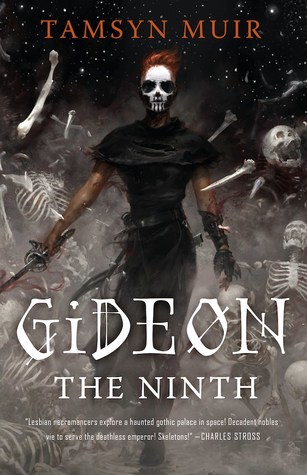
12. ‘Gideon the Ninth’ by Tamsyn Muir: https://www.goodreads.com/book/show/42036538
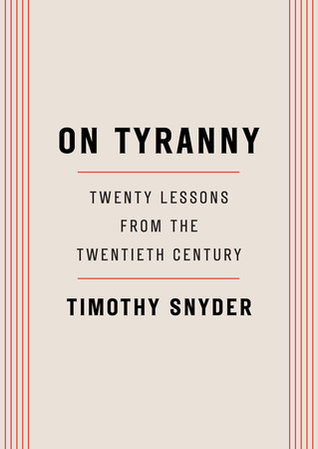
13. ‘On Tyranny: Twenty Lessons from the Twentieth Century’ by Timothy D. Snyder: https://www.goodreads.com/book/show/33917107
14. ‘Nature Poem’ by Tommy Pico: https://www.goodreads.com/book/show/32311036
15. ‘The Prophets’ by Robert Jones Jr.: https://www.goodreads.com/book/show/52576333
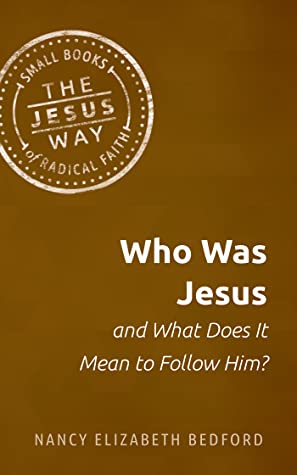
16. ‘Who Was Jesus and What Does It Mean to Follow Him?’ by Nancy Elizabeth Bedford: https://www.goodreads.com/book/show/54851903

Top Ten Albums of 2021

https://embed.music.apple.com/us/playlist/top-ten-albums-2021/pl.u-oZyl3vgTRqDBzX

2021 has been a year full of ups and downs. Through it all, music has remained an important force of well-being, emotional connection, and joy. As a result, I wanted to celebrate the music that meant so much to me in 2021 by creating a ‘Top Ten Albums of 2021’ list. I hope that this playlist can bring you as much joy as it has brought me!

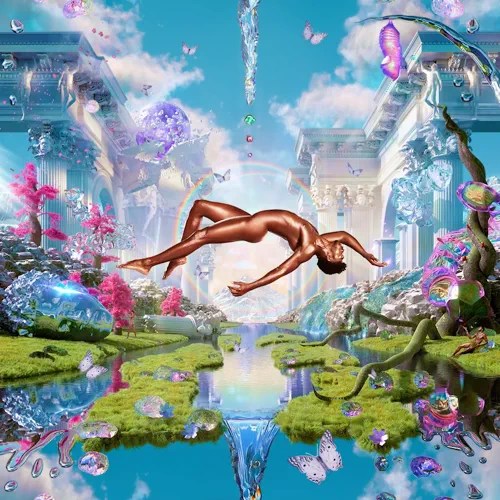
1. Lil Nas X, ‘MONTERO,’ https://music.apple.com/us/album/montero/1582660720
2. Olivia Rodrigo, ‘SOUR,’ https://music.apple.com/us/album/sour-video-version/1582274783
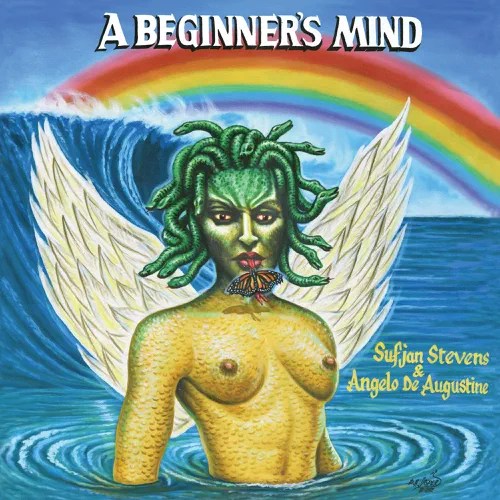
3. Sufjan Stevens & Angelo De Augustine, ‘A Beginner’s Mind,’ https://music.apple.com/us/album/a-beginners-mind/1572705246
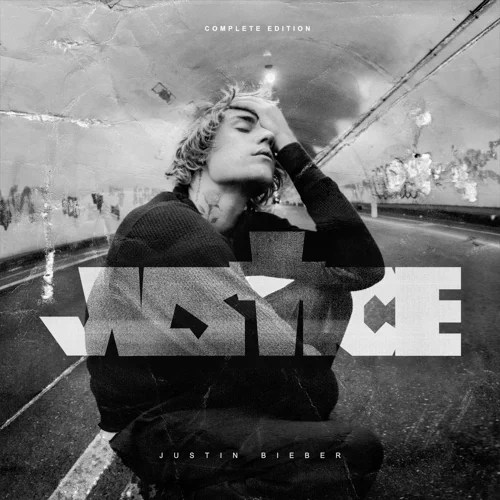
4. Justin Bieber, ‘Justice,’ https://music.apple.com/us/album/justice-the-complete-edition/1588043759
5. Imagine Dragons, ‘Mercury – Act 1,’ https://music.apple.com/us/album/mercury-act-1/1574210519
6. Kacey Musgraves, ‘star-crossed,’ https://music.apple.com/us/album/star-crossed/1582033417
7. Leon Bridges, ‘Gold-Diggers Sound,’ https://music.apple.com/us/album/gold-diggers-sound-deluxe/1594978030
8. Halsey, ‘If I Can’t Have Love, I Want Power,’ https://music.apple.com/us/album/if-i-cant-have-love-i-want-power/1574984039
9. Taylor Swift, ‘evermore,’ https://music.apple.com/us/album/evermore-deluxe-version/1547315522
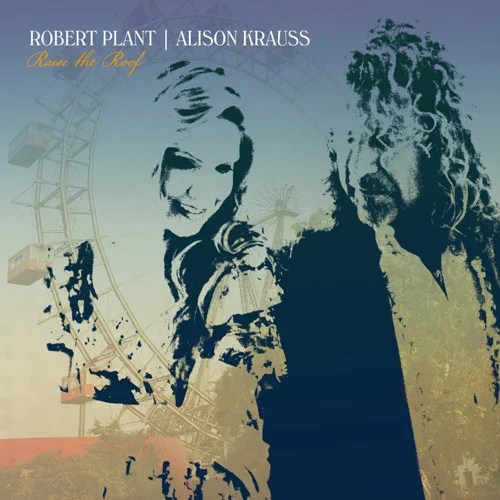
10. Robert Plant & Alison Krauss, ‘Raise The Roof,’ https://music.apple.com/us/album/raise-the-roof/1578783072

_____

I hope that you enjoyed this list! What have been some of your favorite albums/songs of 2021? I’d love to hear/get some song suggestions in the comments section!

Thanks for reading and have a blessed end to your 2021~

Prayer of Lament

Creator God of supposed justice and love,

why did you create a world full of such pain, division, and discord?

where our own families and friends

exchange violent words and vicious lies

about scientific health precautions

and protecting the basic human dignity and life

of all people?

Where dehumanization and oppression

become the expectation and right of those in power?

God of justice and love,

didn’t you proclaim victory over sin and death?

Why then must we feel the sting of death

and the seeming victory of sin?

I know you commanded us to be your agents of love and justice –

to teach others and make disciples of all people –

but we are walking in the valley of death

and I do fear evil.

But I also put my faith and hope

in a justice-filled day.

Please lead me Lord,

and I’ll try my best

to follow.

Amen.

‘Nature Poem’ by Tommy Pico Review

www.goodreads.com/book/show/32311036

“NDN teens have the highest rate of suicide of any population group in America. A white man can massacre 9 black ppl in a church and be fed Burger King by the cops afterward. A presidential candidate gains a platform by saying Mexican immigrants are murdered and rapists

It’s hard for me to imagine curiosity [in America] as anything more than a pretext for colonialism” (Tommy Pico, ‘Nature Poem,’ 40).

“Look, I’m sure you really do just want to wear those dream catcher earrings. They’re beautiful. I’m sure you don’t mean any harm, I’m sure you don’t really think abt us at all. I’m sure you don’t understand the concept of off-limits. But what if by not wearing a headdress in yr music video or changing yr damn mascot and perhaps adding .05% of personal annoyance to yr life for the twenty minutes it lasts, the 103 young ppl who tried to kill themselves on the Pine Ridge Indian reservation over the past four months wanted to live 50% more” (Tommy Pico, ‘Nature Poem,’ 56).

8 Key Takeaways from ‘Atando Cabos: Latinx Contributions to Theological Education’ by Elizabeth Conde-Frazier

www.goodreads.com/book/show/56783225

8 Key Takeaways from ‘Atando Cabos: Latinx Contributions to Theological Education’ by Elizabeth Conde-Frazier

1. “After the 1940s, a tension arose among [Latin American] churches. The premillennial missionaries had greater influence, and the tension between their advocacy of social action and the priority of evangelization was transmitted to Latin America….some of the existing Protestant organizations ruptured into two campus: those maintaining active social witness and ecumenism, whose theology emphasized God’s work in history, and those who identified with separatist fundamentalism….Since the liberal proponents of the Social Gospel viewed education as a way of bettering society, they sought to have conversations with the intellectual classes and promoted political debates. They also promoted education that included more than teaching the Bible, such as classes in literacy, agriculture, and dance. The conservative group viewed education as a means to bring people to personal salvation and discipleship. Rooting the gospel in a particular country or culture was the goal of both of these groups, but the dimensions of life that they believed were to be engaged by the gospel determined what aspects of life their educational models engaged” (Conde-Frazier, ‘Atando Cabos,’ 14-15).

2. “When it comes to service, such ministry is understood to occur not only within the church but also in the world. We need but two things to be faithful servants in this understanding of the priesthood of all believers. The first is vocation. All must be provided opportunities to discover their vocation, and then opportunities to develop that vocation. The second thing we need to know is the state of the world. We need to inform ourselves about the state of the world in order to be moved through the Spirit to use our vocation for the restoration and redemption of the world….Understanding faith in the context of the world allows us to use our faith to carry out our vocation. Faith lived within the context of the world determines the diversity of needs and the vocations that can be developed to address these needs by the ministries of the priesthood of all believers….The ministry of the clergy is given by Christ to the church as a gift so that the Word is preached and the sacraments are administered. Ordination is a public confirmation of that calling, and at ordination the person ordained does not receive special power but rather a commissioning” (Conde-Frazier, ‘Atando Cabos,’ 43-44).

3. “Knowledge can only exist and be generated in and from a contextual reality. Such an understanding of theology steers us away from theology as sana doctrina (sound doctrine)-a set of universal formulations that cannot be changed and that comes from outside of ourselves to define us, regardless of our present situation and culture. This also changes the epistemology, pedagogy, and curriculum because it steers us away from a taught transmissive theology and from being inactive recipients of that transmission. Instead, it situates us as agents who are actively engaged in a collaborative construction of knowledge” (Conde-Frazier, ‘Atando Cabos,’ 51).

4. “Curriculum is not only books or lectures; it also includes the persons involved in the teaching/learning engagement and the content of their lives and realities….Theological education brings us to the work of reconciliation of human bonding and of connecting with creation….The politics, economics, suffering, structures of new identity formation, and strategies of survival and justice of such immigration and diasporic living must be included if resilience is to open a door to the doing of a theology of hope and thriving that informs an ecclesiology and missiology for the Latin@ community of the diaspora” (Conde-Frazier, ‘Atando Cabos,’ 61).

5. “Interdisciplinarity and the arts [must] become a part of the curriculum and pedagogy” (Conde-Frazier, ‘Atando Cabos,’ 70).

6. “If we are intentional about using [new] media and we balance them pedagogically, they provide ways of engaging multiple intelligences….All [new] media invites educators to rethink their content and more intentionally insert different types of questions along the spectrum of Bloom’s taxonomy to develop critical thinking for our students during a semester….In virtual education, an action-reflection-action model can guide our resources and modules….The tasks of the church-fellowship, social action, proclamation, teaching social justice, reconceiving economic arrangements, and liturgy-all need to be reevaluated and redefined for [virtual education]” (Conde-Frazier, ‘Atando Cabos,’ 75-77).

7. “Let’s go beyond the traditional forms of education…provide classes in English or Spanish…provide health education…share information with the community about knowing our rights as immigrant person, or about financial literacy…offer GED classes…offer parenting classes…foster entrepreneurial and financial literacy skills….Theological education that is guided by a vision of mission integral will reach to every sphere of life” (Conde-Frazier, ‘Atando Cabos,’ 97).

8. “Whether in or beyond congregations, whether singular or blended, vocations today place great demands on people. Young people seem to recognize this, and they are especially interested in developing their spirituality as they go about the work of changing the world as an expression of their passions. Theological education for these times must attend not just to skills but also to the cultivation of deep and durable spirituality” (Conde-Frazier, ‘Atando Cabos,’ 123).

Jesus Commands us to Put Down Our Weapons and Idolatry of Violence

“Jesus said to Judas, ‘Friend, do what you are here to do.’ Then the crowd with swords and clubs came and laid hands on Jesus and arrested him. Suddenly, one of those with Jesus put his hand on his sword, drew it, and struck the slave of the high priest, cutting off his ear. Then Jesus said to him, ‘Put your sword back into its place; for all who take the sword will perish by the sword’” (Matthew 26:50-52).

Jesus never condoned physical harm, violent retribution, or revenge.

In fact, Jesus was diametrically opposed to violence because it is antithetical to God’s holy nature and design for humanity/creation.

As the Rittenhouse verdict has shown us, once again, we live in a society and Justice-lacking ‘justice’ system that prioritizes power maintenance, white supremacy, and vigilante violence over human life and flourishing.

It is clear that our hope cannot be in the systems and structures of humanity, but in God alone.

Jesus commands us to put down our weapons and idolatry of violence, lest we all perish by that very sword.

Just as Jesus, Christians must stand for human life. For the flourishing of all creation. For God’s kingdom here, on Earth, as it is in Heaven.

Lord, give us courage, hope, and love in the face of great evil and despair. In your mercy and strength, may your will be done through us, Amen.

‘Advancing the Mission: The Order of Deacon in the United Methodist Church Book’ by Margaret Ann Crain

www.goodreads.com/review/show/4327901192

As a United Methodist Deacon, I am in awe and Thanksgiving of Margaret Ann Crain for putting together this comprehensive and highly enjoyable historical overview of how the current Deacon order came to be: through persistence, obedience to the Holy Spirit, and strategic planning! This book is a gem and I recommend it to every person who is curious about diaconate ministry!

Also, this quote was one of the most succinct and helpful descriptions of the call to Deacon ministry I have seen to date:

“What is a deacon? A deacon is an extension of the mission of the church, and extension of the Eucharistic table of Grace, wherever she or he is appointed. A deacon is also accountable to the UMC, accountable to uphold the highest standard of ethics to bring the needs of the world to the local church. Deacons are entrepreneurs, seeking out places to respond to the calling that God has placed on their hearts. Deacons are enfleshed representatives of Christ, seeking to contribute to the transformation of the world. Deacons are embodied mission” (Margaret Ann Crain, ‘Advancing the Mission,’ 132).

Tommy Pico’s ‘IRL’

www.goodreads.com/book/show/30968235

“I recoil

at we. Now we

know; We feel love

when; We believed

the Earth was flat

until; We stir with

heavy feeling bc…

I wipe my muddy feet

on the loveseat of We

unless I’m talking

about you and me.

Kumeyaays knew

a rounded Earth based

on the curve of stars

or didn’t, I’ll never know.

It’s a dark part inside me.

Books are fallible, towers

of letters with the power

you give them. It’s heartbreaking

to watch your pillars fall

Watch the crops dry up

and die House set on fire Forced

to dig up yr dead To. Literally.

Dig. Up. The. Old. Graveyard.

n move w/them onto a stone hill

where nothing that grows

can live. Penned in like cattle.

Approaching scientism,

universalism, a supremacy

of any given thought

process—strikes me A

hammer of dark spots. America

never intended for me to live

So that we never intended

to include me”

(Tommy Pico, ‘IRL,’ 70).