Book Review: “Beguiled by Beauty: Cultivating a Life of Contemplation and Compassion” by Wendy Farley

Beguiled by Beauty: Cultivating a Life of Contemplation and Compassion by Wendy Farley is a practical exploration of the practice of contemplation and attentiveness to beauty. Farley makes this connection between contemplation and beauty by first emphasizing that “the core practice of a contemplative way of life is radical compassion….A contemplative way of life is motivated by a devotion to the welfare of others” (7). While contemplation is primarily practiced through interior work and discipline, Farley notes that such interior work is oriented toward relationality. This relationality originates, and is rooted, within the Divine. From this rootedness within the Divine Beloved, the interior work of contemplation then radiates outward as radical compassion for all creation.

With this understanding of the communal nature of contemplation and its interior work, Farley then defines beauty. She defines beauty as “the threshold to Divine Goodness and a door into radical compassion. When we fall in love with the beauty of the world, we care all the more passionately about the well-being of the environment and all of the beings in the world” (16). Since attentiveness to beauty connects humanity with the Divine Goodness of God’s creation, leading humans into radical compassion and care for that creation. Consequently, this attentiveness to beauty, according to Farley, is a crucial tool of contemplation. From this synthetic framework of the interior work of contemplation and attentiveness to beauty, rooted in relationality with Divine Goodness, leading to radical compassion amidst of all of creation, Farley structures the contents of Beguiled by Beauty.

Following the first introductory chapter where Farley establishes this framework, chapters 2-3 elaborate this framework in greater detail. Chapters 4-7 provide general examples of the synthetic framework between contemplation and beauty, while also noting benefits and challenges within this framework. In the eighth chapter, Farley concludes with practical examples of contemplative practices that offer opportunities to be attentive to beauty within everyday life.

Beguiled by Beauty successfully achieves Farley’s goal of providing a theoretical and practical approach to contemplative practice that is attentive to beauty so that individuals can draw deeper into God’s Divine Goodness and bear fruits of radical compassion toward all of compassion. However, a greater exploration into the role of privilege within practices of contemplation would have made this text stronger. For example, Farley states that “the causes of well-being and unhappiness lie deep inside us and we share them without knowing it” (10). While this statement rings with truth, so too do systematic and structural injustice and marginalization dramatically and tangibly impact lived experiences within all of creation. Consequently, a nuanced discussion of the role of privilege and oppression, and their consequent impact on access to contemplation, would have made the argument of this text stronger.

Psalm 42 Lectio Divina Response Poem

Pour out humility on the mighty

and convict them of the evil

in superiority and domination,

oh Lord.

My heart is disquieted within

the real-word examples of suffering

caused by pride and greed.

My mind is heavy with the knowledge

of dissension, based on arguments

over the worthiness and belovedness

of those on the margins.

My soul longs for unity

based on the constant striving

to tangibly center

the imago dei

within all Creation.

Unity does not mean assimilation

but just-filled redistribution

of the resources and experiences

necessary to thrive.

May we tirelessly pursue

the unity of all creation

that translates into the

tangible flourishing

and holistic well-being

of all people

and all created things.

Amen.

Prayer (5.14.23)

When Mother God

created the heavens and the earth,

including all of humanity,

tending to the most minute details,

and ensuring a rich tapestry

of variance and difference,

she/they looked at all of it,

all of us,

and said that everything

was “very good.”

Go forth with this knowledge

of universal goodness,

in the creative power

of the Holy Spirit,

and love courageously.

Amen.

Unnamed (a poetic response to Acts 16:16-19)

Naming:

a human process

enacted at birth

to those deemed human

enough

to deserve a name.

The slave woman –

unnamed –

regulated to the margins

of knowability and purpose

through commerce and profitability.

But God knows her name –

our names –

in the deepest sense

in the fullest sense

beyond even how we know ourselves.

The unnamed woman is known

fully and completely

as a beloved child of God. 

Sofia –

Is that your name?

The Holy Spirit present –

manifested in an unexpected form

to challenge and convict

to defy the social/cultural

norms and expectations.

To remind us,

all of us,

that the truth of God

is proclaimed loudly and boldly

where people are willing

to be transformed

to be changed

to take action –

if we are only willing

to humble ourselves

and listen

to the revelation visible

within the goodness

of all Creation.

Review of “God Will Be All in All: Theology through the Lens of Incarnation” by Anna Case-Winters

Check out my review of Anna Case-Winters’ book, God Will be All in All: Theology through the Lens of Incarnation,” in the latest issue of Religious Studies Review, Volume 49, through Rice University: https://onlinelibrary.wiley.com/share/author/NVHF3F7URZYBKBY6EBF6?target=10.1111/rsr.16391

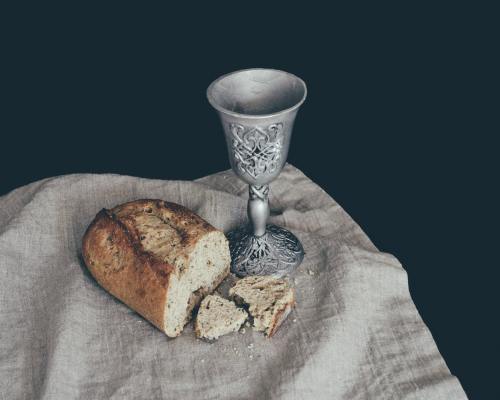
The Table is Set and Open

The table is set and open
welcoming the holy and the hungry
to the feast of love and full bellies
for the communion of all creation.


The heavenly table is set on Earth
to nourish all people
through the breaking of bread
and the pleasure of wine.


Bread and Wine:
God’s manna of love
and promise of mercy and grace
offered to all without condition.


The metaphoric body and blood:
God’s divine paradigm of justice
predicated on love
and the belovedness of all creation.


We all deserve full bellies
and joyful existence.

Review of ‘Indigenous Theology and the Western Worldview: A Decolonized Approach to Christian Doctrine’ by Dr. Randy Woodley

https://link.growkudos.com/1m8wk8nxxq8

This article I wrote for Wiley Author Services provides a brief summary of Dr. Randy Woodley’s text, ‘Indigenous Theology and the Western Worldview: A Decolonized Approach to Christian Doctrine.’ The review can be a helpful resource if you are trying to decide if you want to read this text. Dr. Woodley’s text is helpful if you are curious about the juxtaposition and mutual learnings between Indigenous Theology and a Western Worldview or decolonial approaches to Christian Doctrine.

What Makes a Home?

My husband and I recently purchased a condo in the Chicago neighborhood of Edgewater. Was this the worst possible time to attempt a home purchase due to the volatile housing market? Absolutely. Did we have any other choice? No.

Luckily, we were able to find a wonderful place at a reasonable rate. Once moved in, we found many unexpected projects that demanded our time, energy, and resources. While we found ways to memorialize and ritualize the move, the demands of life, the stresses of home projects, and the volatility of the economic realities of our time often distracted us from the overall blessings of first-time homeownership.

As a result, I found myself caught off guard during a blessing my parents offered when they visited from Omaha, Nebraska about a month after we moved. Borrowing the blessing from the 1946 film, It’s a Wonderful Life, my parents presented us with a fresh baguette from a local bakery, a container of salt, and a bottle of red wine. Reciting the words of blessing from the movie, my parents offered ‘bread’ so that our household would never know hunger, ‘salt’ so that our lives would always have flavor, and ‘wine’ so that joy would always be found in our home.

In this moment, I realized that our home is more than a physical space: it is a place from which love, family, community, and life can be nourished in our lives as a couple. Our home is a place from which we can find strength and grounding to go out into the world and enact that same love, community, and life.

For the first time, our new condo felt like a home from which our new lives could be formed. And all of this came from a little blessing of bread, salt, and wine, offered from the wisdom and love of parents.

‘Why Do the Nations Rage? The Demonic Origin of Nationalism’ by David Ritchie Book Review

Why Do the Nations Rage?: The Demonic Origin of Nationalism by David A. Ritchie

My rating: 5 of 5 stars

“It is crucial for Christians to clearly recognize the distinction between rightly ordered patriotism and idolatrous nationalism; to recognize the difference between gratitude to God for one’s nation and the temptation to worship one’s nation as a god. None of us are above this temptation. Sadly, the people of God have had a long history of looking to political power for salvation. We have a long history of crying out the name of insurrectionist ‘Barrabus!’ instead of the name of the Prince of Peace, who alone has the power to make all things new. The powers are real, and they are greedy for our affection. Yet the exhortation of Joshua 24 still applies to the people of God today. We must put away the gods of our fathers and the gods of the nations. We must choose this day who we will serve” (142).

This book is deeply relevant, contextual, and a must read for the perilous time in which we live in the United States. Ritchie asks the question ALL people who call themselves Christians need to ask: who do we serve/pledge our allegiance? Christ? Or the United States?

‘Why do the Nations Rage? The Demonic Origin of Nationalism’ by David Ritchie is a contextual and relevant unpacking of the idolatrous and demonic power of nationalism, particularly in how it has co-opted a façade of Christianity to justify itself. Ritchie shows that christian nationalism is a paradoxical identity because “nationalism involves the exaltation of a nation (or a particular conception of a nation) to the highest place of allegiance, concern, and devotion, [thus] it is essentially idolatrous” (6). Nationalism cannot be Christian because it is inherently idolatrous. Furthermore, Ritchie shows that while the January 6, 2021 Capitol Riot is a contemporary manifestation of nationalism, nationalism has ancient roots and is generally demonic: “when examined through the lens of biblically demonology, you will discover that there is little distinction between the ancient pagan’s worship of national patron deity and the contemporary nationalist’s tendency to exalt a particular nation to a place of functional divinity” (6). As a result, Ritchie argues that “nationalism-not atheism, not new age spiritualism, nor any other traditional world faith-is the greatest religious rival to the Christian gospel that vies for the worship of [God’s] people….seek[ing] to conquer Christianity, or…to co-opt Christianity for its own purposes” (6).

Ritchie accomplishes this goal through five sections in this book.

The first section carefully describes how the New Testament writings of Paul use the terms ‘powers,’ ‘principalities,’ ‘authorities,’ and other terms to describe “spiritual beings that are personal in nature and exert corporate influence over groups of people….and geographical territories” (9), including ‘nations.’

Ritchie then summarizes these demonic ‘spiritual beings’ under the umbrella term ‘powers’ and explains how these ‘powers’ were the reason why the God of the Old Testament/New Testament condemned ‘pagan nations’ and ‘national patron deities’ in the second section.

In the third section, Ritchie shows that Christ has defeated all demonic forces of evil through his life, death, and resurrection. Thus, Christ has not only defeated our reliance upon the ‘powers,’ but has commanded us to resist these powers. Christians cannot simply ignore or turn a blind eye to the idolatry of nationalism, but we must name, denounce, and resist the evils of nationalism through primacy of devotion to Christ and the transformative work of the Holy Spirit.

In order to accurately name the evils of nationalism today, so that Christians can denounce and resist them, section four describes how nationalism has co-opted a façade of Christianity and created a systematic theology of nationalism” (93). In short, this theology of nationalism primarily “stands against the first commandment and the Christian understanding of God as the one to whom highest praise and devotion belongs…[through] the belief that ‘loyalty to the nation overrides all other loyalties'” (95). Some modern examples include the symbols of “Columbia (or Freedom) as the patron goddess of the United States….flags function[ing] beyond a mere identifying symbol of a nation, and instead having been imbued with sacred significance and accorded ritualistic worship”(97), the pledge of allegiance in schools, national art that uses Christian imagery, ascribing messianic characteristics to politicians, manifest destiny, and ascribing ‘right Christian belief’ to stances, beliefs, and platforms of politicians or political parties. As Ritchie explains, “the term ‘Christian nationalist’ is just as oxymoronic as ‘Yahwist Baal worshiper.’ When Christianity mixes with nationalism, the sum of this syncretism yields only nationalism….For this reason, Christians must have no part in nationalism” (122).

In the fifth and final section, Ritchie provides tangible ways for Christians to resist the demonic powers of nationalism. First, ministry leaders must confront nationalism head-on in their ecclesial spaces (125). Ritchie provides very practical and tangible Christ-centered responses to the pitfalls and lies of nationalism. This was my favorite section of the book and I’d recommend snagging yourself a copy if just for this section alone (although I think all five sections are incredible and a must read)!

Right before the invasion of the Capitol on January 6, 2021, the rioters stood with defamed Christian images and ‘prayers’ were lifted. I agree with Ritchie when he states, “I felt grieved that images of the name of my Savior were displayed alongside this spectacle of nihilistic division and death” (4). This book, and the commandments from Christ articulated throughout this book, are the urgent call to Christians across our nation, and across the globe, to resist the demonic powers of nationalism and to once again devote our hearts, minds, and actions fully to Christ. Amen!


View all my reviews

Happy Fourth of July

Be grateful for what you have,

they say.

Okay.

I’m grateful for my marriage

with my husband.

But many folks across the country,

emboldened with power,

want to rip our marriage apart,

calling our love unconstitutional,

along with many other nasty

words, phrases, and threats.

Seeking the goal of allowing

states to make our union illegal,

or perhaps a full-fledged federal ban.

So I’ll be grateful for what I have,

as I’ve been told,

before it all gets legislated away.

Happy Fourth of July